
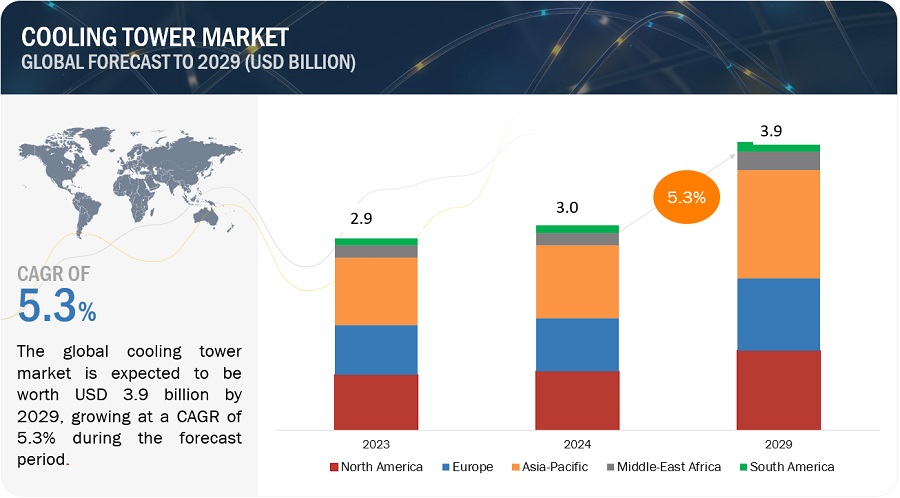
The global cooling tower market size is estimated to be 2.1 billion in 2021 and projected to be USD 2.6 billion by 2026, at a CAGR of 4.5%.
The expansion in food means that the industry is growing. It is due to the increase in demand for food, which is being driven by population growth and the rise of the middle class in emerging economies. The expansion in food also results in more food production and an increased need for farmland.
Large chemical and petrochemical industry to drive cooling tower market in country
The cooling tower market in the country is expected to grow at a healthy pace during the forecast period. This growth can be attributed to the expansion of the food and beverage industry, which is anticipated to create a demand for cooling towers in the near future. The government's initiative to promote investments in the food processing sector is also expected to fuel the growth of the cooling tower market.
The food industry is changing
The food industry is changing rapidly. With the expansion of supermarkets and the growth of the restaurant industry, there is an increased demand for food products. This has led to a boom in the food manufacturing industry, with new companies springing up to meet the demand.
The food manufacturing industry is now one of the most important industries in the world. It employs millions of people and generates billions of dollars in revenue each year. The industry is also responsible for a large percentage of the world's food supply.
With the global population expected to reach 9 billion by 2050, the demand for food will only continue to grow. The food manufacturing industry is poised for even more growth in the years to come.
Download PDF Brochure https://www.marketsandmarkets.com/pdfdownloadNew.asp?id=268219049
What this means for the future of food
The expansion of the food industry has been nothing short of phenomenal in recent years. With the rise of the middle class and the globalization of the world economy, the demand for food has increased exponentially. And with that demand has come an explosion in the number of businesses catering to it.
The food industry is now a multi-billion dollar global enterprise, and it shows no signs of slowing down. This is good news for those who love food, as it means there are more options than ever before. But it also presents some challenges.
One of the biggest challenges facing the food industry today is how to keep up with the demand. The industry will need to find ways to produce more food while using fewer resources.
Another challenge facing the industry is how to deal with waste. With so much food being produced, there is also a lot of waste. Much of this waste ends up in landfills, where it emits methane, a greenhouse gas that contributes to climate change. The industry will need to find ways to reduce its waste output and make better use of its resources.
The challenges
The pros and cons of expansion in the food industry
The food industry is one of the most competitive industries in the world. In order to stay ahead of the competition, many companies have turned to expansion as a way to grow their businesses. While expansion can bring new opportunities and increased revenue, it can also be a risky proposition. Before making the decision to expand, it's important to understand both the potential benefits and the potential drawbacks of this strategy.
One of the biggest benefits of expansion is that it can lead to increased revenue. When a company expands into new markets, they have the potential to reach new customers and tap into new sources of revenue. Additionally, expansion can also lead to economies of scale, which can help a company reduce costs and improve profitability.
However, there are also some risks associated with expansion. One of the most significant risks is that it can be difficult to manage a larger company. As a company expands, they may need to invest in new management personnel and systems to help keep things running smoothly. Additionally, expansion can also be expensive, and there's always the possibility that a new market may not be as receptive to a company's products or services as expected.
How this will impact the economy
The expansion of the food industry will have a positive impact on the economy. This is because the expansion will create jobs in the industry and also lead to an increase in production. The expansion will also lead to an increase in exports, which will boost the economy.
Conclusion
The expansion in food is a great opportunity for businesses to increase their profits. However, it is important to remember that with this expansion comes the responsibility to provide healthy and safe products to consumers. With the right planning and execution, businesses can take advantage of this trend while still meeting their obligations to customers.


No comments:
Post a Comment